
Having a nice, effective website for your author business is a wonderful thing. But if you don’t know how to get people to it, it unfortunately doesn’t do you nearly as much good.
While you can certainly drive people directly to it via your email newsletter, social media, or paid ads, an often underutilized additional method is through SEO. And while SEO may sound daunting if you’ve never explored it, the great news is that it doesn’t take a ton of technical know-how to implement some effective basics.
Let’s walk through what SEO is, why it matters for authors, and a handful of simple but high-impact practices you can implement today.
What is SEO?
SEO stands for “search engine optimization.” It refers to online search engines like Google and Bing, and optimizing it means improving your website itself so that it shows up in search engine results more often or with a higher ranking in the pages of results.
When it comes to books, the goal is to get your website to show up when people search for things like:
- “Fantasy books with dragons”
- “Romance author book bundles”
- “Best indie sci-fi books”
When your site is optimized, it means search engines can better understand your content and show it to the right readers who are looking for it.
A quick note: You’ve likely also been hearing talk of something called GEO, or “generative engine optimization.” This refers to optimization for AI-driven discovery, which works differently than search engine discovery. While GEO is becoming important to implement on author websites as well, this article focuses specifically on SEO basics only. You can learn more about GEO basics in this article.
Why SEO Matters for Authors
When they aren’t finding recommendations directly on social media, most readers are actively looking for books they’re interested in via search engines. They aren’t randomly browsing author websites, but instead are deliberately searching by the types of phrases already mentioned above.
This being the case, SEO can help authors:
- Get discovered organically (without paying for ads)
- Attract the right audience (people already looking for your genre or topic)
- Build long-term visibility (content can bring traffic for months or years)
Think of implementing SEO as planting seeds: you won’t see results overnight, but with time, things will grow and become more visible and valuable—but only if cultivated using the right practices.
Basic SEO Best Practices
Let’s keep things simple and actionable with a numbered checklist of best practices to always keep in mind when constructing your author website:
1. Use Clear Page Titles
Each page of your website should have a title that clearly designates exactly the main purpose of that page. So instead of just using something like “Home,” use a title like “Urban Fantasy Author [Your Name] | Wolf Shifter Romances.” This helps search engines and readers instantly understand what that specific page is all about.
When creating page titles, remember to:
- Add only one title per page (using a Heading 1 or H1 text element)
- Place the title somewhere near the top of the page (though it doesn’t have to be the first line)
- Use descriptive wording, but don’t make the title too long or overwrought
2. Structure All Content with Headings
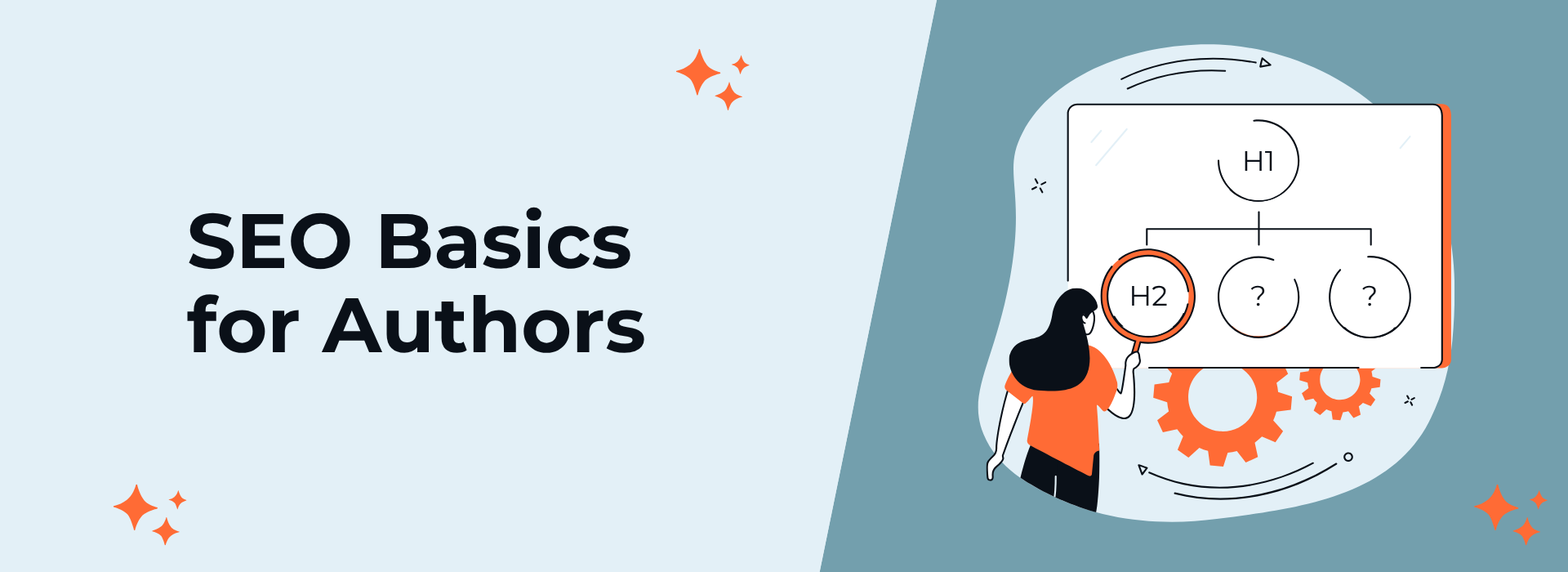
Headings (often designated as H1, H2, H3) organize your content and make it easier to read. For example, the title of the article section you’re currently reading—Basic SEO Best Practices— is an H2 heading, while the numbered sections underneath it, like this current section called “Structure All Content with Headings”—is an H3 heading.
In general, aim to follow these conventions:
- H1: Main page title
- H2: Main section titles
- H3: Subtitles within sections
So for example, if you have a page about a specific book, it may have headings like:
- H1: Your Book Title
- H2: Book 2 in the [Series Name]
- H3: Read a sample here
Search engines use this type of heading structure to understand your content hierarchy and make it easier to select what to show in searches.
3. Write with Keywords in Mind
Keywords are the phrases readers type into search engines. Though they’re called “keywords,” they’re more like “keyphrases,” and again, include examples like:
- “LitRPG novels with elves”
- “Slow-burn academia romance books”
- “British spy thriller book series”
While it’s important to keep these kinds of phrases in mind when writing headings and descriptions across your site, you don’t need to worry about stuffing keywords everywhere. Just use them naturally where they fit, and make sure your page clearly reflects what it’s all about.
In other words, if your book or series involves a found family of witches who go on an adventure to rediscover their magic—just say so plainly.
4. Use Alt Text for Images
Every non-decorative image on your website should include alt text, or “alternative text.” This is a type of metadata that clearly labels, with written words, what the image shows. It’s used to:
- Help search engines understand the image
- Improve accessibility for visually impaired visitors
The alt text you include for images is different from the image file name. So instead of labeling it “book_cover_image.jpg,” alt text should be something like: “Cover of contemporary romance novel [Book Title] featuring two teenagers holding hands and smiling.”
Alt text should be simple, descriptive, and genuinely helpful for understanding the purpose of the image (which is why decorative elements don’t always need alt text). One or two full, short, descriptive sentences usually suffices.
5. Create Dedicated Pages for Your Books
The more content you can add to your site by way of multiple pages that are actually relevant to your author business, the more opportunity you have for any one of those pages to show up in searches.
So don’t just list all your books on a single page and leave it at that—give each book its own page to create more concentrated, helpful content. And each book page should include:
- Title and subtitle
- Book description/blurb
- Genre and tropes
- Purchase links
- Keywords naturally woven into the content
Doing this increases your chances of showing up in search results for specific topics and keyword phrases.
6. Make Your Site Easy to Navigate
Just like humans, search engines prefer sites that are easy to understand and use. To achieve that, make sure:
- Your navigation menu is simple and clear
- Important pages are easy to find (Books, About, Contact)
- Internal pages are linked to each other in a logical way
Good structure of your site as a whole leads to better indexing. Plus, using internal links wherever possible has the added bonus of users spending more time perusing your site and thus a higher probability of taking some kind of beneficial action.
7. Start a Blog
This is an optional action to take, but it can be a powerful one. This is because the more pages of relevant content you add to your website, the more opportunity there is to show up in search results.
For a blog, you can consider writing about:
- Aspects of your genre
- Your writing process
- Book recommendations
- Story, character, or worldbuilding deep-dives
Blogging is one of the easiest ways to grow SEO over time because it’s an easy way to continuously add additional pages to your website. This, however, can also be achieved by adding any types of pages to your site that don’t necessarily fall under the layout or organization of a traditional “blog.” Whatever types of pages you choose, they should still follow best SEO practices.
SEO in Action
An author website that’s strongly optimized for SEO might look something like this:
- Clear homepage with genre and branding
- Individual book pages with strong descriptions
- Proper headings and structure throughout
- Images labeled with descriptive alt text
- Blog posts or other pages that target reader interests
This doesn’t mean pages and sections need to be overly complex or fancy; just intentional. SEO isn’t about trying to game the system—it’s about providing relevant content and solid clarity.
As long as your website clearly communicates who you are, what you write, and who your books are for, you’re already ahead of the SEO game.
Related Questions
How long does SEO take to start working?
SEO is a long-term strategy, so it may take a few months to start seeing noticeable results. This is also dependent upon your niche and competition. But basic improvements like better page structure and keyword clarity can help search engines understand your site faster. From there, ranking builds gradually, which is why consistency matters more than speed here.
What page of my website should I optimize for SEO first?
Start with your homepage and your primary book pages, as these are the most important entry points for readers and the most likely to rank and convert visitors into readers. Once those pages are solid, you can expand your efforts to additional pages on your site.
What role does schema markup play in SEO?
Schema markup is a type of structured data that helps search engines better understand the content on your website. It can be used to label things like books, reviews, and events, which can lead to more enhanced search results like rich snippets, which make your search listings more eye-catching and informative.
